|

|
|
|
|
|
From Charlie Omana, Chair, Highland Park Action Committee:
Neighbors,
On April 3 HPAC sent a letter to Seattle’s Human Services Department to follow-up on previous letters submitted in March of this year and December of 2016 for which we have yet to receive a response.
As you may be aware, Catherine Lester, Director of the Human Services Department, has tendered her resignation and her final day will be May 1, 2018. As such, I made sure to also address this letter to Jason Johnson, the current Deputy Director who has been appointed by the mayor to oversee the department in the interim upon Ms. Lester’s departure.
Given the length of time that has elapsed since HPAC’s original letter in 2016, I felt it pertinent to request a response from the city no later than Friday, April 27, 2018 addressing the concerns of Highland Park residents and surrounding communities concerning the Myers Way Parcels’ conversion to parks and the overarching issues related to having encampments in our communities.
I must inform you that at the most recent Camp Second Chance Community Advisory meeting, there was discussion about allowing the camp to remain in place longer than the 2 years allowed by city ordinance. Presently, sanctioned encampments can only stay at a site for 12 months, with an option to renew for a 12-month extension. Any changes to this ordinance must be made by the city council. Should the council decide to take up such an amendment, it may prolong the length of time for which Seattle residents and our neighbors in unincorporated King County can expect to see usable park space at Myers Way.
As the city mulls permitting Camp Second Chance for another 12 months at the Myers Way site, it is only appropriate that the city assume responsibility to the community by addressing our 3 requests (found in the letter text below) in turn:
April 3, 2018
Catherine Lester, Director
Jason Johnson, Deputy Director
Department of Human Services
City of Seattle
Seattle Municipal Tower – 58th fl.
700 Fifth Avenue
Seattle, WA 98124-421
Director Lester and Deputy Director Johnson:
I am following up on a letter that was sent to the Human Services Department on March 8, 2018 concerning the Myers Way Parcels, specifically, and sanctioned homeless encampments, generally. That letter, in turn, was a follow-up to letter sent on December 13, 2016 to George Scarola, Director of Homelessness under the administration of former mayor Edward B. Murray.
As you are aware, Camp Second Chance became established on the Myers Way Parcels in July 2016, meaning that the encampment has already been present at this site (in both unsanctioned and sanctioned capacities) for one year and nine months. Our most recent letter to you requested that Camp Second Chance not be permitted for an additional 12 months on Myers Way, and that a new site be procured for this camp outside of the boundaries of the Highland Park neighborhood.
In addition to not renewing Camp Second Chance’s permit on Myers Way, our letter requested the following three things:
1) Adoption of a set of best practices (manifested as our Neighborhood Protocols for Sanctioned Encampments which are enclosed below) by which the City of Seattle will abide prior to sanctioning an encampment in a given neighborhood.
2) An accelerated timeline and plan on when and how the Finance and Administrative Services Department will relinquish the Myers Way Parcels to the Department of Parks and Recreation.
3) A plan on how jurisdictional issues that arise from the presence of sanctioned and unsanctioned encampments at the interface of city, unincorporated county, and state land will be resolved.
Allow me to reiterate that per the 2010 United States Census, Highland Park has a lower median income ($47,600) and a higher proportion of residents who identify as a person of color (50.2%) compared to Seattle as a whole ($74,458 and 33.7%, respectively). Our historically working-class neighborhood has suffered from a lack of investment going back at least a century and from being redlined in the 1930s. Yet we have overwhelmingly borne the burden of the city’s response to homelessness by hosting three encampments over the last ten years and serving as a staging area for a proposed safe lot for those residing in vehicles.
The residents of Highland Park and surrounding communities rallied to preserve the Myers Way Parcels as recreational space for the enjoyment of all citizens. Despite our limited resources, we have risen to the challenges brought by the homelessness crisis and have gone beyond what most other neighborhoods in Seattle have been asked to do. The neighborhood of Highland Park now implores the City of Seattle to demonstrate its commitment to equity by responding to our requests as outlined above.
To that end, we respectfully ask to receive a response to our requests by Friday, April 27, 2018 at 5:00 p.m. Pacific Daylight Time.
Sincerely,
Charlie Omana
Chair, Highland Park Action Committee
hpacchair@gmail.com
Enclosure
CC: Mayor Jenny A. Durkan
Council Member Lisa Herbold, Chair: Civil Rights, Utilities, Economic Development and Arts
Council Member Kshama Sawant, Chair: Human Services, Equitable Development, and Renter Rights
homelessness@seattle.gov
Suggested Neighborhood Protocols for Sanctioned Encampments
For the Neighborhood
1. Transparency:
A. Provide information what other sites were investigated and the reasons why that site was chosen.
i. For the Myers Way site – why no other site in West Seattle were viable.
B. Provide information on how the race and social justice tool was used in deciding upon the proposed site.
C. Identify and work with the neighborhood groups/committees to put together community info sessions including locations, dates, and outreach methods to present the plan for the neighborhoods and the encampment.
D. Develop outreach materials that are multilingual and provide language and sign interpreters at community meetings.
E. Utilize trained facilitators to run community meetings and have present the Dept. of Neighborhoods, Dept. of Health, Director of Homelessness, SPD, the non-profit charged with outreach and support of the encampment, and any other relevant Departments and decision makers that can answer questions and make decisions. Take our feedback and incorporate any additional needs/resources.
F. Publish final plan prior to encampment being permitted.
2. Accountability:
A. Provide a written agreement between Neighborhood Group(s) and the City on how long the site will remain, the size of the encampment, how the encampment will be constructed, and how it will be deconstructed.
i. For the Myers Way site – we are requesting the one year permit for the sanctioned encampment to be retroactive to when the camp was established in July 1, 2016. Therefore, a one year permit until July 1, 2017.
ii. That Highland Park, Myers Way or any other sites in the surrounding South Delridge/Westwood/Roxbury Hill/ Arbor Heights/White Center/North Highline area will not be chosen again for 10 years.
iii. The Myers Way encampment will not grow beyond 35 tents and up to 50 people and will continue as a clean and sober camp.
iv. Why is it tents and not tiny homes?
B. Provide a plan and outline the increase of police, fire, EMS, and other services.
i. Specific to Myers Way – outline of how situations will be handled that cross city lines between Seattle Police and King County Sheriff’s office.
C. Assign a consistent contact person within the City to be a single point of contact for neighbors and businesses for specific issues related to the encampment, as well as the unsanctioned encampments/RVs in the area, outside of any emergency situations.
i. This contact person should coordinate any needs between other departments – such as SPU, SDOT, etc…
D. Implement programs to help reduce homelessness and crime such as Law Enforcement Assisted Diversion (LEAD) and REACH
i. In Highland Park and South Delridge within the next 3-6 months.
E. Provide a timeline and plan for addressing existing unsanctioned encampments and RVs in the area and how any future unsanctioned encampments that may develop as a result of the sanctioned encampment being in the area will be handled.
F. Provide a timeline and plan for addressing existing abandoned homes/squatters in the area.
G. Evaluate and increase of lighting in the area – especially near any bus stops, residential and business properties and have regular trash/dumping pick up.
i. Provide regular trash/dumping pick up at least 2x per week for any problem areas that surround an encampment on Myers Way
H. Plan and execute regular public education sessions on issues of homelessness and substance abuse with the appropriate non-profits for the community at large.
I. Provide updates and feedback sessions via community meetings at least every three months in addition to the community advisory council.
J. Provide each of the local community groups the opportunity to each have a seat on the community advisory council.
HPIC has many upcoming events including Corner Bar featuring the band Moonspinners on 4/6, Art Lounge on 4/13, and family movie night on 4/20. There will be an HPIC work party on 4/29 from 10am-2pm. Coming in May is the 10th annual Uncorked fundraiser, and coming in June is the 2nd annual Album Side party featuring a food truck and paper airplane contest for the kids.
Lt. Ron Smith reviewed crime statistics for the area. Highland Park is seeing a drastic increase in property crimes. Residential burglary count is 21 so far this year, with only 10 at the same point last year. Car prowls are up 14 from last year thus far. An effort is underway to get an emphasis patrol for the Highland Park / South Delridge area.
The HPAC 2018 Executive Committee was introduced, including Charlie Omana as Chair, Gunner Scott as Vice Chair, Michelle Glassley as Treasurer, and James Tucker as Secretary.
The letter written by HPAC to the head of the Seattle Human Services Department regarding the Camp Second Chance renewal was discussed. Various requests of the city were made in the letter, and we have yet to hear back. It was also pointed out that Highland Park and surrounding neighborhood has borne the brunt of the homelessness issue, and it’s only equitable to have other neighborhoods step up to host encampments. Other issues raised included jurisdictional issues and feeling that those who were voicing negative comments about the camp were not being heard by the City.
Vice-Chair Gunner Scott met with the mayor’s office to discuss a meeting to Highland Park for which the mayor accepted an invitation during her West Seattle “town hall” meeting on February 24, 2018. HPAC has not yet received a response from the mayor. Watch this space.
The Find It, Fix It Community Walks: Post-Walk Update report issued by the city for Highland Park in October 2017 was reviewed and discussed.
Time was running short, so committee breakout sessions did not take place.
Please be sure to join us for our April 25, 2018 HPAC Community Open House! Food and drink will be provided.
Come learn about HPAC, share your thoughts and comments about what is needed in the neighborhood, and most of all, share some food in the great company of your neighbors. All are welcome, including kids. We will have low key format. Let’s kick off spring together!
To ensure that there is enough food for everyone, please be sure to RSVP at the following link by April 13, 2018: RSVP here.
Dear Neighbor,
As you look at HPAC’s new executive committee, you will see some new faces, and find familiar ones, too!
I am delighted to serve as the new chair for the Highland Park Action Committee and look forward to working with you to encourage positive change in our neighborhood.
As an LGBT person of color and child of an immigrant, it makes me proud to live in a neighborhood with such wonderful cultural, economic, and ideological diversity and strong community ties as Highland Park. I believe that these qualities are assets, and should be leveraged to effect a more equitable, just, and environmentally conscious neighborhood.
Please be sure to join us for our March meeting next Wednesday. You will find our March 28 agenda below. Don’t forget to mark your calendars for our community open house on April 25! Be sure to RSVP so that we can save a plate for you.
If you have any questions or comments, I can always be reached at hpacchair@gmail.com. I hope to meet you soon!
Sincerely,

Charlie Omana
2018 Chair, HPAC
MARCH 28, 2018 HPAC Meeting
Greetings! Be sure to join us next Wednesday for our March HPAC meeting!
All HPAC meetings are held at the Highland Park Improvement Club, 1116 SW Holden St. Seattle, WA 98106 on the 4th Wednesday of the month (from Jan – June & Sept – October) Doors open at 6:30 – Meeting from 7:00 – 8:30 pm.
The March agenda is as follows:
7:00 Community Announcements
HPIC
Other
7:05 HPAC Executive Committee Updates
A.) New Executive Committee Introductions
B.) Discuss HPAC Letter (HPACMyersWayEncampment 2018) and Meeting concerning Camp Second Chance and Myers Way Parcels
C.) Meeting with Mayor’s Office
7:10 Find It, Fix It Walk Report Read-Through
We will go through each page of the Find It, Fix It Community Walks: Post-Walk Update report issued by the city for Highland Park in October 2017. Be prepared to discuss.
Please access the report here:
Highland Park Find It, Fix It Community Walks: Post-Walk Update Report
8:10 Standing Committee Breakout Session: Neighborhood Infrastructure and Neighborhood Engagement
After many attempts at previous meetings, we WILL be breaking out into committees this meeting. Pick your poison below:
1) Neighborhood Infrastructure– This committee will address issues of streets/sidewalks, transit, crosswalks, HP/SW Holden/curb cuts, traffic signals: key responsibilities can include applying for Neighborhood funding, developing campaigns, outreaching to City departments, educating policy makers.
2) Neighborhood Engagement – This committee will address issues of community engagement including safety/crime/SPD, encampments, SPU, beautification, parks, trails, trash, events, and environmental issues: key responsibilities can include applying for Neighborhood funding, coalition building with other neighborhood groups, outreaching to City departments, developing projects, and engaging neighbors.
NEXT MEETING
 Please be sure to join us for our April 25, 2018 HPAC Community Open House! Food and drink will be provided.
Come learn about HPAC, share your thought and comments about what is needed in the neighborhood, and most of all, share some food in the great company of your neighbors. All are welcome, including kids. We will have low key format. Let’s kick off spring together!
To ensure that there is enough food for everyone, please be sure to RSVP at the following link by April 13, 2018: RSVP at https://goo.gl/forms/wntQ9uiiUq2D2qXH2
TAKE ACTION!
Comment on Camp Second Chance permit renewal
The City of Seattle is seeking community input concerning the permitting of Camp Second Chance for another year on the Myers Way Parcels. City policy presently allows sanctioned encampments to remain at a location up to two years. However, as reported on the West Seattle Blog, the camp has already been at the site for a year and (almost) 9 months. The city eventually sanctioned and provided funding for the camp in February of 2017.
A public meeting seeking comments was held by the city on Tuesday, March 20, but you can still submit comments until Thursday, April 5, 2018!
To do so, simply email your comments to homelessness@seattle.gov (with Myers Way in the subject line) or call 206-727-8496 by April 5th.
Apply to serve on the Seattle Renter’s Commission
The Seattle Renter’s Commission is seeking applicants to serve as community commissioners on its 15-member panel. Applicants living in diverse rental-housing types are encouraged to apply.
The Seattle Renter’s Commission was established by the Seattle City Council in 2017. The volunteer commission is composed of a diverse group of renters across Seattle who advise, inform, and counsel the mayor, city council, and other city departments on issues concerning and affecting renters. Interested parties can apply using an online application by Thursday, April 12 at 5 p.m.
Mailed applications can be requested by contacting Maureen Sheehan at (206) 684-0302, or can be picked up at Seattle Department of Neighborhoods in Seattle City Hall, 600 Fourth Avenue, 2nd floor, between 8 a.m. and 5 p.m.
Mandatory Housing Affordability (MHA) Citywide Open Houses: Learn more about MHA and other City services that promote equity
District 1 Open House: May 9, 6-8pm at Louisa Boren K-8
Seattle City Council has formed a Committee of the Whole (which means all Councilmembers participate) for MHA and will be holding committee meetings and public hearings over the next 6 months. All events are open to the public and provide time for public comment. See City Council’s Committee of the Whole for MHA page Get in touch with City Council and share your suggestions for Mandatory Housing Affordability:
citywideMHA@seattle.gov

All HPAC meetings are held at the Highland Park Improvement Club, 1116 SW Holden St. Seattle, WA 98106 on the 4th Wednesday of the month (from Jan – June & Sept – October) Doors open at 6:30 – Meeting from 7:00 – 8:30 pm
Agenda Includes:
 Meet Lt. Ron Smith, Seattle Police Department: Reviewing current crime stats and responding to current concerns/issues
7:10p
Meet Seattle City Light’s Advanced Metering Program Team
City Light is excited to announce that advanced meters are the new meter standard for City Light’s service territory. In October 2016, City Light started the installation of advanced meters on new residential and small commercial construction projects under normal business operations. The majority of residential and commercial customers will begin receiving new meters in the summer of 2017. This is an incremental approach, with benefits realized` once the entire system is installed by 2019. Customers who do not wish to receive the benefits of an advanced meter can choose to opt out.
7:30p Community Announcements
HPIC
Other
 Our election is this month – nominations can be taken via email or at our February meeting – each position is for a one year term.
To nominate yourself and/or another HPAC member– please provide either via email to hpacchair@gmail.com or verbally in person at Feb meeting: Name, position sought, email, phone, address, and up to a 75 word response to the following:
1) Neighborhood Infrastructure- this committee will address issues of streets/sidewalks, transit, crosswalks, HP/SW Holden/curb cuts, traffic signals: key responsibilities can include applying for Neighborhood funding, developing campaigns, outreaching to City departments, educating policy makers.
Potential Issue Areas to Address
2) Neighborhood Engagement – this committee will address issues of community engagement including safety/crime/SPD, encampments, SPU, beautification, parks, trails, trash, events, and environmental issues: key responsibilities can include applying for Neighborhood funding, coalition building with other neighborhood groups, outreaching to City departments, developing projects, and engaging neighbors.
Potential Issue Areas to Address
Next meeting is March 28, 2018
West Seattle and Ballard Light Rail Link Extension Sound Transit’s Online Open House
The West Seattle and Ballard Link Extensions are part of the regional ST3 package that voters approved in November 2016. Sound Transit is seeking public and agency input on alignment and station location alternatives. Visit the online open house to comment and give feedback.
Seattle Parks and Recreation launches 2018 Major Projects Challenge Fund; Applications due March 2018
Does your community group have a proposal on how to renovate, expand, or upgrade a Seattle Parks and Recreation (SPR) facility or park? The Major Projects Challenge Fund (MPCF), which is a Seattle Park District funding initiative, will provide a funding match to a community-initiated “major project” that is not otherwise covered by an identified SPR funding source. The MPCF will provide up to $1.6 million per year as a match to a significant improvement or expansion at an existing SPR park or facility. Click here to view complete 2018 funding criteria.
Take the Seattle Department of Transportation On-Street Parking Survey
 Weds. January 24, 2018
All HPAC meetings are held at the Highland Park Improvement Club, 1116 SW Holden St. Seattle, WA 98106 on the 4th Wednesday of the month (from Jan – June & Sept – October) Doors open at 6:30 – Meeting from 7:00 – 8:30 pm
Agenda Includes:
Meet Lt. Ron Smith, Seattle Police Department: Reviewing current crime stats and responding to current concerns/issues
 Meet the Friends of Southwest Tennis
Indoor Tennis Proposal: View short presentation about the project idea, the study findings, and start the conversation with Lisa Corbin
 Meet SPU’s Sharps Collection Pilot Program
Seattle Public Utilities is helping clean up Seattle through their Sharps (needles, syringes, and lancets) Pilot Program. The program, which began in August of 2016, helps mitigate sharps litter in public spaces, provides sharps drop off locations throughout the city, and training on needle disposal and safety.This training will go over further details on the program, sharps disposal and safety, and risks of bloodborne pathogens. For additional questions, please contact Alison Steinbacher (206-684-3326; alison.steinbacher@seattle.gov) or Tracy Cramer (206-684-5813; tracy.cramer@seattle.gov).
 Meet SPU’s Natural Drainage Systems Program
Seattle Public Utilities (SPU) is planning to build natural drainage systems in your neighborhood in 2019.
HPIC
Other
Bylaws to be presented and voted at our Annual Meeting on Weds. February 28, 2018.
1) Neighborhood Infrastructure- this committee will address issues of streets/sidewalks, transit, crosswalks, HP/SW Holden/curb cuts, traffic signals: key responsibilities can include applying for Neighborhood funding, developing campaigns, outreaching to City departments, educating policymakers.
Potential Issue Areas to Address
2) Neighborhood Engagement – this committee will address issues of community engagement including safety/crime/SPD, encampments, SPU, beautification, parks, trails, trash, events, and environmental issues: key responsibilities can include applying for Neighborhood funding, coalition building with other neighborhood groups, outreaching to City departments, developing projects, and engaging neighbors.
Potential Issue Areas to Address
HPAC is ready to get started again in 2018!
 Bylaws
With that in mind, a small committee has reviewed and made draft changes to our by-laws to reflect where HPAC is today (it has been 14 years, since HPAC Bylaws have been updated).
Bylaws to be presented and voted at our Annual Meeting on Weds. February 28, 2018.
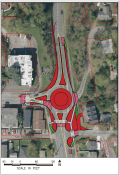 WA State grant denied for Highland Park Way Roundabout Project
We are extremely disappointed to learn that we did not get the state grant for the HP roundabout project. We will continue to advocate and SDOT will continue to work with us on looking at next steps. See West Seattle Blog full story.

All HPAC meetings are held at the Highland Park Improvement Club, 1116 SW Ho
lden St. Seattle, WA 98106 on the 4th Wednesday of the month (from Jan – June & Sept – October) Doors open at 6:30 – Meeting from 7:00 – 8:30 pm
Agenda Includes:
 Meet Lt. Ron Smith, Seattle Police Department: Reviewing current crime stats and responding to current concerns/issues
 Meet the Friends of Southwest Tennis
Indoor Tennis Proposal: View short presentation about the project idea, the study findings, and start the conversation with Lisa Corbin
The city-funded study showed that the West Seattle Peninsula is underserved for year-round indoor tennis, and a new facility is potentially very viable. Our site for the proposed facility was slated to be at the southwest athletic complex (29th and Thistle) which is school district property. Well, after almost 36 months of green lighting this community project, the school district has pulled the site off of the table. Now we are searching for other potential sites. One potential spot that has emerged is at West Crest Park, along 8th avenue South of the new parking lot and bathroom. An indoor tennis building wouldn’t affect any of the existing amenities at the park. There are of course many steps ahead, and years of work. Before we approach parks, we would like to discuss this idea with the neighborhood. https://www.facebook.com/SouthwestIndoorTennis/
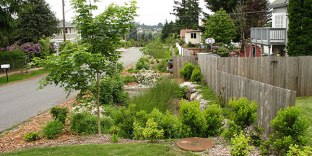 Meet SPU’s Natural Drainage Systems Program
Seattle Public Utilities (SPU) is planning to build natural drainage systems in your neighborhood in 2019. When it rains in this part of West Seattle, pollution from our streets runs into Longfellow Creek untreated. This is not healthy for the creek or for people. The good news is: there is something we can do. Natural drainage systems capture and clean pollutants before they can reach the creek. SPU has identified streets in the Longfellow Creek Basin that are technically feasible to construct natural drainage systems, and have surveyed residents on those streets to identify existing drainage issues and gauge where there is support for these systems. Please contact Jonathan Brown, Project Manager, for additional questions (206.386.4027 or email jonathan.brown@seattle.gov)
Goals:
Community Development Process: To identify the issues, discuss each one and agree on the priority. Sort the issues into short‐term or long‐term projects and begin to evaluate how your committee would like to approach each issue. Develop activities, strategies, and outcomes for each project. Plan and implement activities. Recruit volunteers, engage neighbors, and educate policy makers.
1) Neighborhood Infrastructure– this committee will address issues of streets/sidewalks, transit, crosswalks, HP/SW Holden/curb cuts, traffic signals: key responsibilities can include applying for Neighborhood funding, developing campaigns, outreaching to City departments, educating policy makers.
Potential Issue Areas to Address
2) Neighborhood Engagement – this committee will address issues of community engagement including safety/crime/SPD, encampments, SPU, beautification, parks, trails, trash, events, and environmental issues: key responsibilities can include applying for Neighborhood funding, coalition building with other neighborhood groups, outreaching to City departments, developing projects, and engaging neighbors.
Potential Issue Areas to Address
 Election is February– nominations can be taken via email or at the Jan or February meetings – each position is for a one year term.
To nominate yourself and/or another HPAC member – please provide either via email to hpacchair@gmail.com or verbally in person at Jan or Feb meetings: Name, position sought, email, phone, address, and up to a 75 word response to the following:
Agenda Sneak Peak!
How to get involved? Come to HPAC meetings and/or email hpacchair@gmail.com
LEAD Program
HPAC co-chairs sent a letter to City Council requesting, again, that Law Enforcement Assisted Diversion (LEAD), a pre-booking diversion pilot program developed with the community to address low-level drug and prostitution crimes be expanded into Highland Park and South Delridge. Our letter is below:
To: City Councilmembers: Sally Bagshaw, M. Lorena Gonzalez, Bruce Harrell, Lisa Herbold, Rob Johnson, Debora Juarez, Mike O’Brien, Kshama Sawant, Kirsten Harris-Talley
November 11, 2017
Fund LEAD expansion into Highland Park and South Delridge in 2018
Dear Councilmembers:
As representatives of Highland Park Action Committee we are writing to request that funding for LEAD expansion specifically for Highland Park and the neighborhoods in South Delridge, including Riverview, Westwood Village, Arbor Heights, Rox Hill, and South of Delridge, is present in the final 2018 City of Seattle budget. LEAD is a proven method to effectively address community safety and public health concerns while minimizing unnecessary and ineffective use of the justice system, and our community is ready for expansion of this proven model.
Highland Park Action Committee (HPAC) is Highland Park Neighborhood Group which represents over 10,000 residents in Highland Park and Riverview. We are an all volunteer & not for profit neighborhood organization and our role is to be an advocate for Highland Park area and to affect positive change in our neighborhood. For the last several years, we have advocated for infrastructure including crosswalks, sidewalks, trails, safety enhancements, zoning changes for affordable housing, and additional resources so we can continue to build a thriving interconnected community.
As you know, Highland Park is a mixed race/mixed income community that has faced historic redlining, has a lower median income as compared to Seattle overall (22% lower than Seattle overall), with 81% of students at Highland Park Elementary on Free or Reduced lunch (May 2016), higher percentage of single parent families (13% as compared to 8% in Seattle overall), and higher percentage of those who speak little to no English (10% vs. 5% for Seattle over all) and 28% of our neighbors are immigrants as compared to 18% for Seattle over all.
This is not to generalize that all those dealing with poverty are in need of services like LEAD, but factors of chronic environmental stress such as under-performing schools, gang violence, street crime, deteriorating public spaces, under resourced infrastructure, concentrated poverty, little to no community based services, a lack of opportunities, and other structural conditions that neighbors are living under, can undermine both individual and community resilience in a neighborhood. Social disorganization, crime, and signs of physical deterioration (e.g. vacant housing, litter, graffiti) in a neighborhood can then signal to residents that their immediate environment is unsafe.
Bringing LEAD to Highland Park and South Delridge, which is designed to improve individual and community well-being by allowing officers to redirect individuals engaged in drug related crime and/or sex work to community-based services instead of jail and prosecution, will help to reduce chronic environmental stress in our area.
Since 2008, Highland Park has hosted three large homeless encampments and has been a staging area for those living in their RVs or cars starting in 2016. The first Nickelsville encampment started 2008 in Highland Park at the Glass Yard site. It was eventually moved until it returned in 2011 until 2015. In June of 2016, Camp Second Chance arrived at Myers Way as an unsanctioned encampment and it was then sanctioned in December of 2016. That area of Myers Way and the Glass Yard site continues to have unsanctioned encampments along with RVs and car campers on various neighborhood streets and the Westcrest and Riverview Park parking lots.
The LEAD expansion into Highland Park and South Delridge would also help to mitigate the impact of the additional environmental stress hosting these encampments has had on Highland Park and the neighborhoods that surround Myers Way Parcel.
This is also in line with the request we made to the City Council and Mayor on December of 2016 for the City to develop an encompassing Neighborhood Protocols for Sanctioned Encampments plan, which was for the City to provide additional resources, including LEAD, to mitigate the impact an encampment would have on the neighborhood.
King County has committed to bringing LEAD to White Center, which borders Highland Park, Westwood, Arbor Heights, Rox Hill, and South Delridge. There are already complications of jurisdiction lines between Seattle Police and King County Sheriff’s office when dealing with issues of crime and safety in this area and not having programs that cross these borders can make the strategies and tactics less effective.
We are grateful for Council Members Juarez, Sawant, Bagshaw, Harris-Talley, O’Brien and Johnson and their responsiveness to community requests thus far regarding the inclusion of LEAD expansion in the budget. We are aware that Council supporters of LEAD are presently advocating for different revenue strategies to support this investment and others. Because LEAD reliably generates criminal justice system cost savings while decreasing participants’ criminal involvement, including expansion of the program makes sense under any budgeting approach.
Despite the growing demand for LEAD in Seattle we know there still no funding in place to make it available to individuals, communities and police officers outside of Seattle’s West and East Precincts. In fact, LEAD is not even at saturation level of service in the West (downtown/Belltown/Pioneer Square/Chinatown-ID) and East (Capitol Hill, Central District, First Hill, Little Saigon) Precincts, where LEAD can currently receive referrals.
Introducing LEAD as an option would provide neighborhoods and police officers an alternative to jail while effectively addressing real public order issues. LEAD is a Seattle-made, nationally-replicated, model that all community members in Seattle should benefit from. Please ensure that LEAD expansion is included the final City of Seattle Budget, no matter which revenue sources are ultimately chosen by the Council to support critical programs.
Sincerely,
Gunner Scott & Michele Witzki
HPAC Co-Chairs
Find It Fix It Walk Report
On Oct 27, 2017, almost 6 months after the walk the report was released. HPAC will be reviewing the report at our next meeting in January 2018.
Please download the report at: Update Report to the Highland Park Find It Fix It Community Walk.
SUCCESS!
Update on update on SDOT’s Chief Sealth High School Walkway Improvements project.
This project is part of the Neighborhood Street Fund program, which funds community-requested projects.
From SDOT – Updated Design
“In August, we announced that we would be removing from our plans the paving of the walkway on 25th Ave SW between SW Trenton and SW Cloverdale streets. After further evaluation and feedback from the community, we’re happy to announce that plans to pave the 25th Ave SW walkway are back on. The walkway on 26th Ave SW will also be improved, as has been the case throughout design.
Thank you to those who provided feedback about this project. We’ll be finalizing the design soon and expect construction to start in mid-2018. Please see the project website to view the updated project design: www.seattle.gov/transportation/NSFChiefSealthWalkway.htm “
Sincerely,
Michael Charles
Outreach Lead
Neighborhood Street Fund Program
Next HPAC Meetings – Agenda Sneak Peak!
Weds., January 24, 2018
Weds. February 28, 2018
|
|
|
|
|
|

 Meet
Meet 
 Highland Park Roundabouts Cleanup and Beautification
 Lt. Ron Smith, Seattle Police Department:
  Meet Judie and Phil from
  HPAC
HPAC 